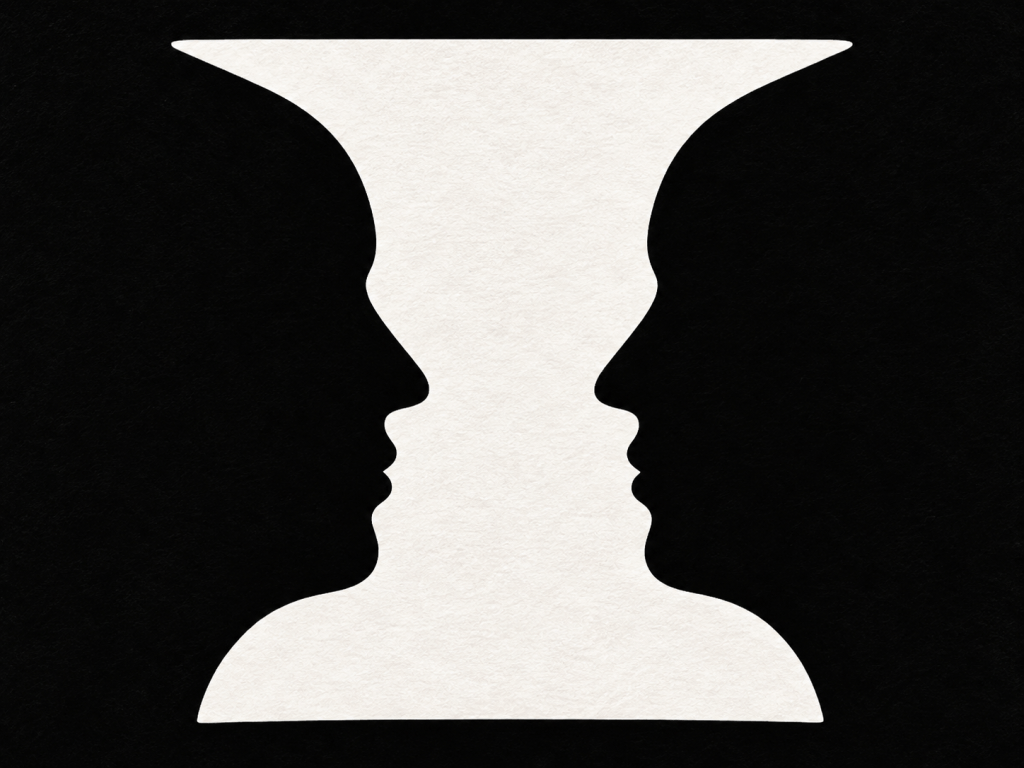
I’ve come to believe that one of the biggest problems in our world isn’t that people disagree. It’s that too often we don’t stop to question why we believe what we believe.
Every day we’re bombarded with opinions, headlines, advertisements, and carefully chosen words designed to influence how we think and feel. Sometimes the information is accurate. Sometimes it isn’t. And sometimes it’s technically true but presented in a way that leads us toward a conclusion we might not otherwise reach.
But for the moment, let’s assume that everything we’re being told is factually accurate. Surely that means we’ll all reach the same conclusion. Right?
Just the Facts…
If you’re over the age of 65 (congratulations) you probably remember Sergeant Joe Friday from the television series Dragnet and his famous catch phrase, “Just the facts, ma’am.”
Interestingly, the familiar wording isn’t what Joe Friday was known to say in the original series.
I find it amusing that one of television’s most famous expressions about sticking to the facts isn’t quite factual itself. (What he actually said was, “All we want are the facts, ma’am.”)
But it got me thinking. Even when we have all the facts, does that necessarily mean we’ll reach the same conclusion? You would think so. But sadly, no. Two people with the same facts can, and often do, reach two entirely different conclusions.
How does that happen? The facts haven’t changed. Is one person right and the other wrong? Not necessarily. Is someone simply ignoring the facts? Perhaps, but not always. So how can two reasonable people reach completely different conclusions from the same information? Perhaps it has something to do with how that information is presented.
Two Headlines, One Story
Let’s examine two hypothetical news headlines by two news organizations covering the same economic report.
Let’s say an economic report shows that consumer prices increased 0.4 percent last month, compared with 0.6 percent the previous month. However, economists had expected an increase of just 0.3 percent.
Headline one reads:
“Monthly Inflation Slows as Price Increases Moderate.”
The second reads:
“Inflation Exceeds Expectations as American Families Face Higher Prices.”
Both headlines are based on the same information. Neither necessarily misrepresents the facts. Yet they leave us with two very different impressions.
If you had only read the first headline, you might conclude that the economy was improving while the second headline might convince you that the economy was in decline.
And how often, in our busy lives, do we read the headline and skip the associated article?
And there it is. Same facts. Different words. Different conclusions.
Words Matter…
Let’s talk more about framing. First of all, what is it?
Framing is the way information, ideas, or events are presented in ways that can influence how people perceive, interpret, and respond to them.
The words we use, the words we read, the words we hear have impact. Writers know this, news organizations know this, politicians absolutely know this, and somewhere, perhaps in the recesses of your mind, you too know this. Words influence, or frame, what we say in order to more clearly convey our meaning or intent. Words, and how they are combined, matter.
Consider these word choices:
| One Description | Another Description |
| Government investment | Government spending |
| Tax relief | Tax reduction |
| Protesters | Demonstrators |
| Changed his mind | Flip-flopped |
| 90 percent survival rate | 10 percent mortality rate |
You have probably encountered these words, or similar ones, hundreds, perhaps thousands, of times and not even noticed the effect they have on you. The words in the left column have very similar meanings to the words in the right column. Yet even when the descriptions are factually equivalent, they can create very different impressions. How do the words on the left make you feel? And the words on the right? Are we responding to the information itself, or to the emotions attached to the words used to describe it?
What Part Do We Play In Our Own Persuasion?
It’s easy to see how two people can read or hear two different headlines about the same set of facts and come to different conclusions. But how is it that two different people can read the same headline and come to two different, and perhaps opposite, conclusions?
“The first principle is that you must not fool yourself—and you are the easiest person to fool.” — Richard Feynman
I’ve noticed that when I read a headline that supports something I already believe, I tend to accept it with little or no question as to its validity.
This is called confirmation bias—the tendency to seek out, interpret, and remember information in ways that support what we already believe. And perhaps the most troubling thing about confirmation bias is how difficult it can be to recognize in ourselves.
So if someone with a different or opposite belief about the subject reads the same headline, there’s a good chance they will come to a different conclusion or dismiss the headline altogether without looking into the facts supporting it. And, of course, the same thing may be happening to me.
We should ask ourselves, “If we are suspicious of the language used by people we disagree with, shouldn’t we be equally suspicious of language used by people we agree with?”
But Are The Headlines Trying To Influence Us?
The short answer? Sometimes. Perhaps even often. But I suspect it’s more complicated than that. Virtually everyone chooses their words with some purpose. But to what extent? To what purpose? Is the writer simply trying to communicate information? Or are they attempting to shape someone’s interpretation? Are they trying to generate an emotional response? Are they trying to attract attention? Are they trying to persuade us?
There are many reasons someone might choose particular words. Whether it supports what you already believe or not, look at the headline with a healthy skepticism. Try not to be cynical, don’t always assume malicious intent. Instead try to see the writer’s point of view and keep an open mind.
If a headline elicits a strong emotion and makes you feel particularly happy, angry or indignant ask yourself…
- What exactly happened?
- Which words are influencing how I feel?
- How might someone with a different perspective describe this?
- Would I react the same way if the people involved were reversed?
Perhaps The Question Isn’t Who’s Right
Let’s take another look at those two hypothetical headlines…
“Monthly Inflation Slows as Price Increases Moderate.”
“Inflation Exceeds Expectations as American Families Face Higher Prices.”
Now, instead of asking yourself, “Which headline is right?” ask, “What would I conclude if I set aside both headlines and examined the facts for myself?”
You might reach the same conclusion. You might reach a different one. But at least it would be a conclusion you arrived at after examining the facts for yourself.
So maybe the next time a headline tells me exactly what I want to hear, that is when I should be most inclined to question it. But that is just what my simple mind is thinking. What am I missing?

